Apollo
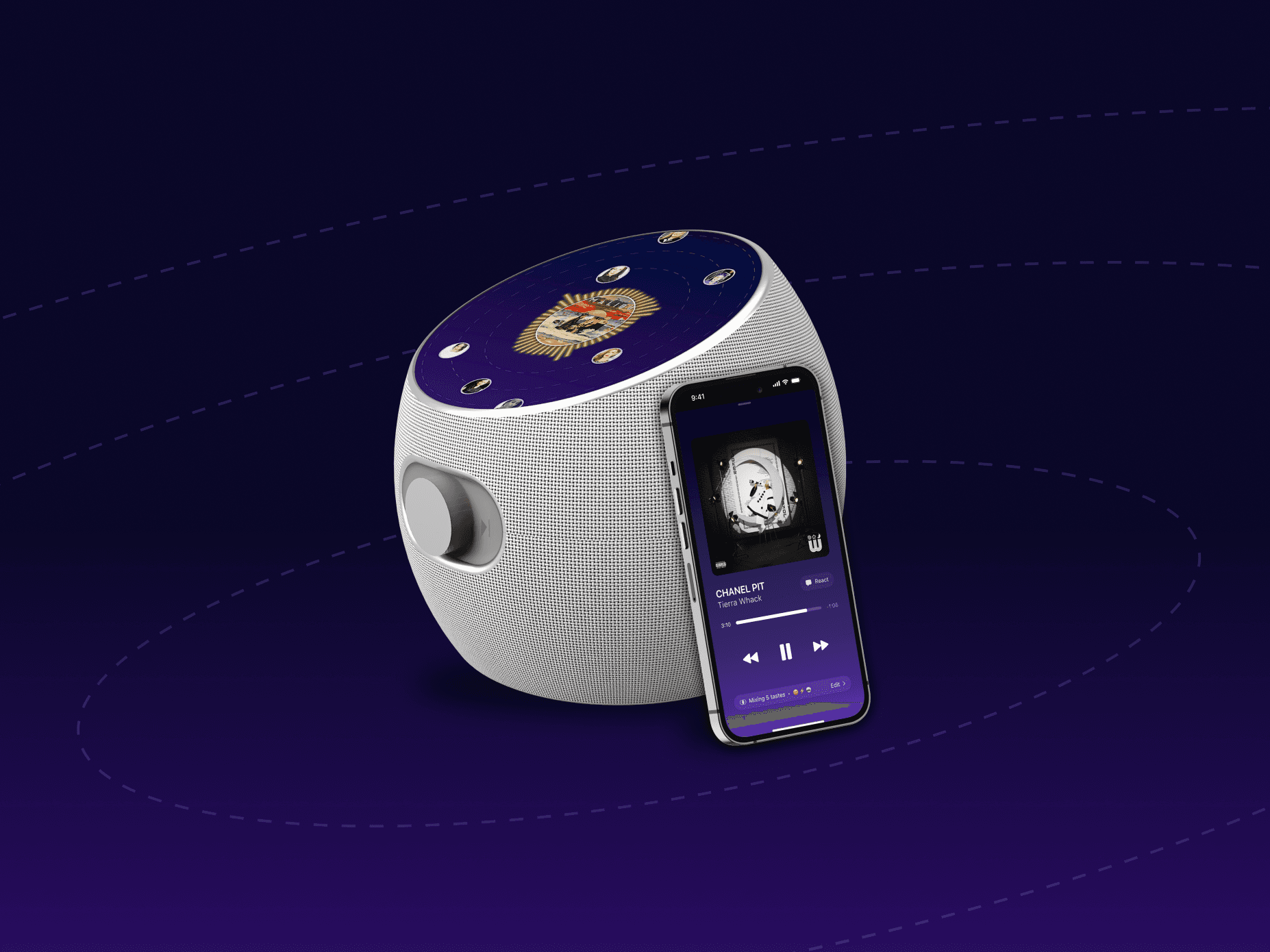
I designed a smart speaker that helps users connect with friends and family. This project taught me the ins and outs of the design process, learning how to start with a broad range of ideas and narrow down using research-based insights that we consistently revisited to inform the design.
We decided to explore intersection of music and wellness, especially tied to connections with friends and family. We sent out a general questionnaire about this topic to our own friends and family, then held interviews with interested individuals.
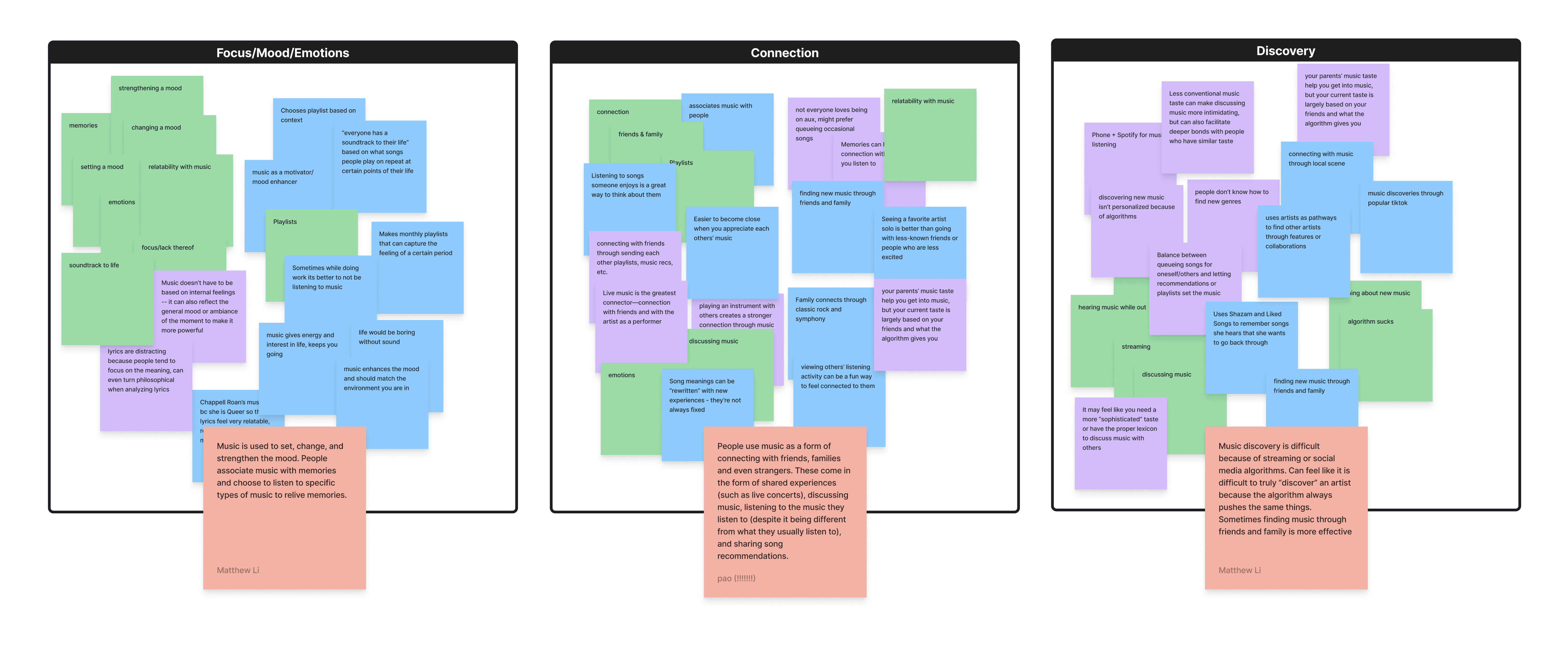
Our next step was key, a technique that will stick with me long beyond this project. We used thematic analysis to turn the results of our interviews into a focused problem statement. This approach was great, because instead of sitting around trying to make an idea come out of thin air or debating about which problem we should target, we let the research speak for itself, identifying key insights. We explored problem statements connected to each of these, then merged them into one:
Our design process was user-driven from start to finish, allowing us to create a product that verifiably aligned with users’ expectations, rather than making assumptions to that end.
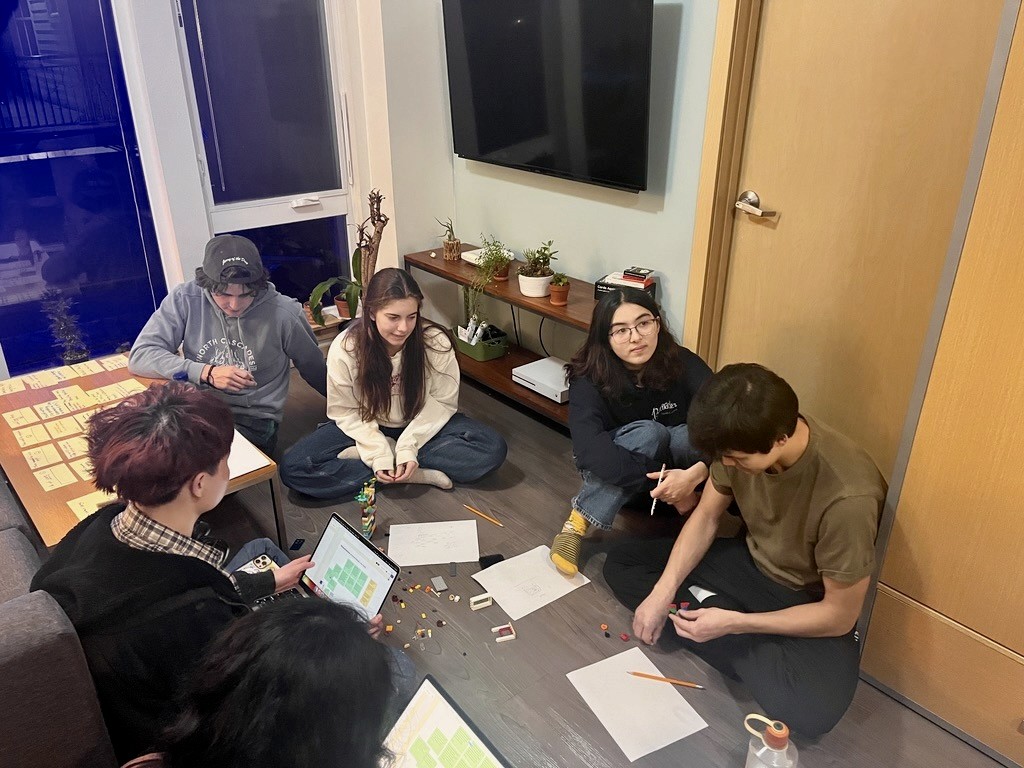
We identified potential features, then led college students (a primary audience) in a participatory design workshop to help understand how these might become a cohesive product. We employed card sorting to evaluate what features participants were drawn to, then asked participants to draw and discuss their ideas.
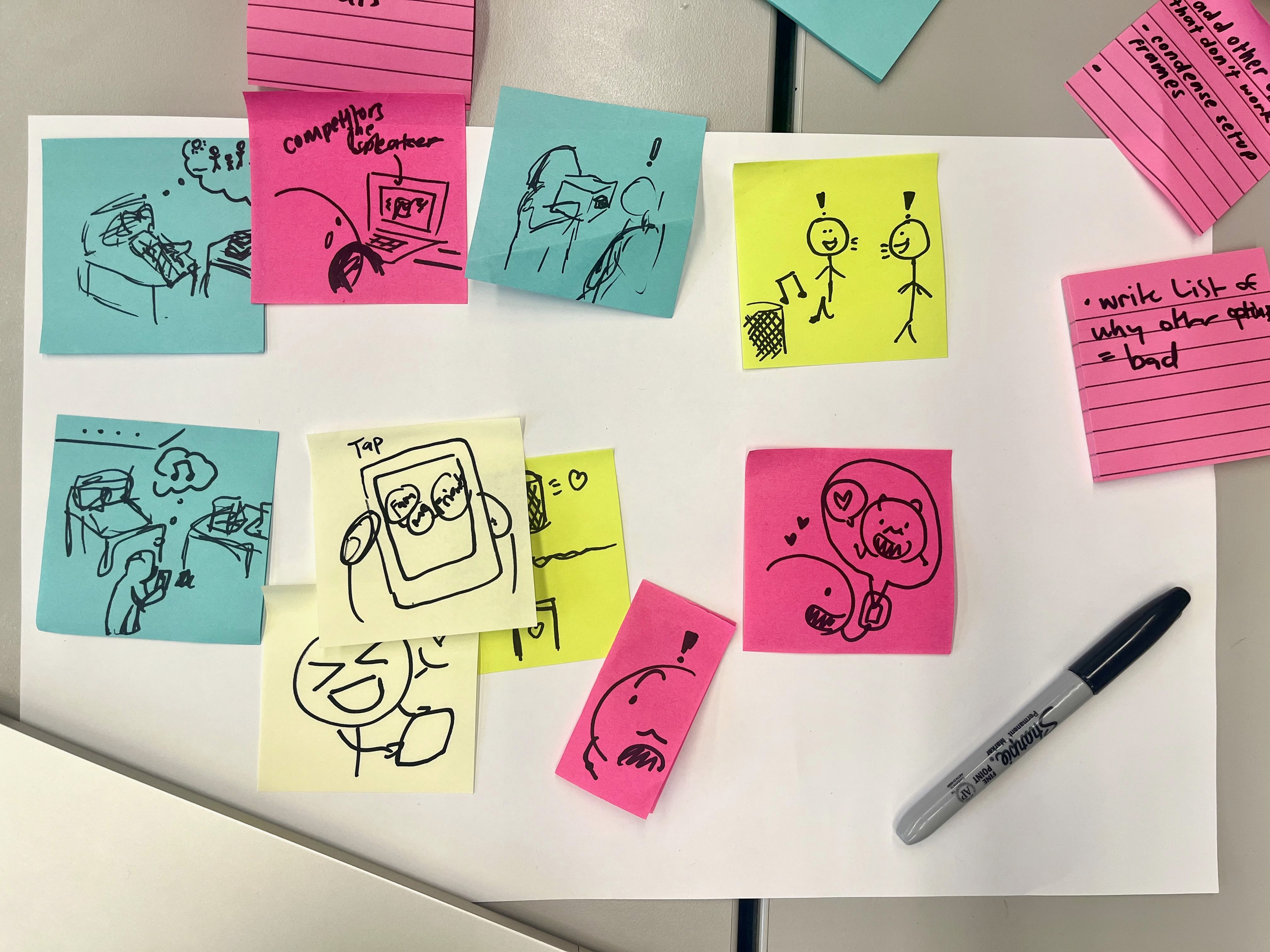
To solidify the primary concept and use cases, we then created a storyboard. The process was a fantastic collaborative design effort — we each created our own versions on sticky notes, which allowed us to select or combine individual frames into a final group storyboard.
We created lower-fidelity prototypes, then performed usability testing with parents, asking open-ended questions about their experience.
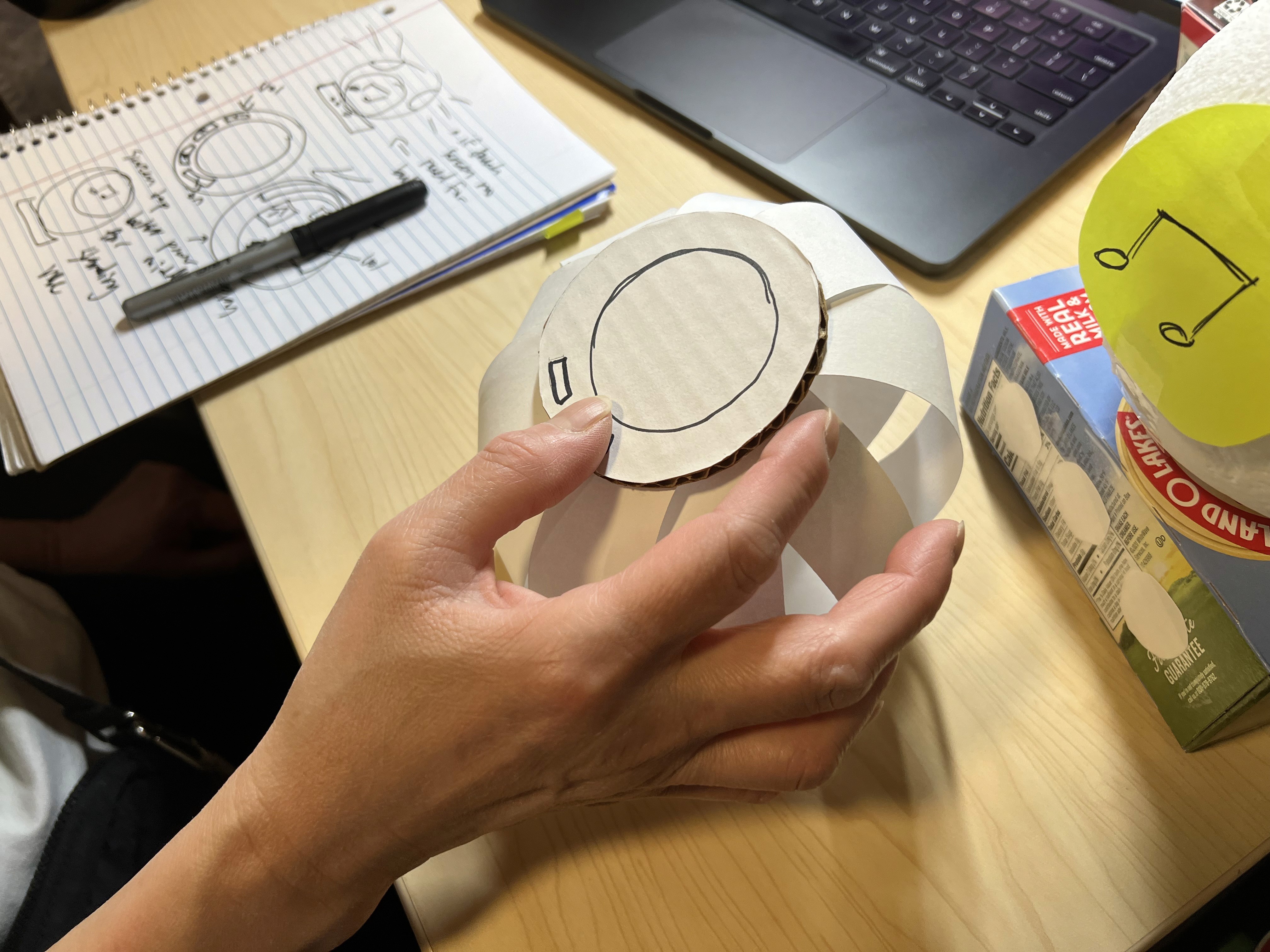
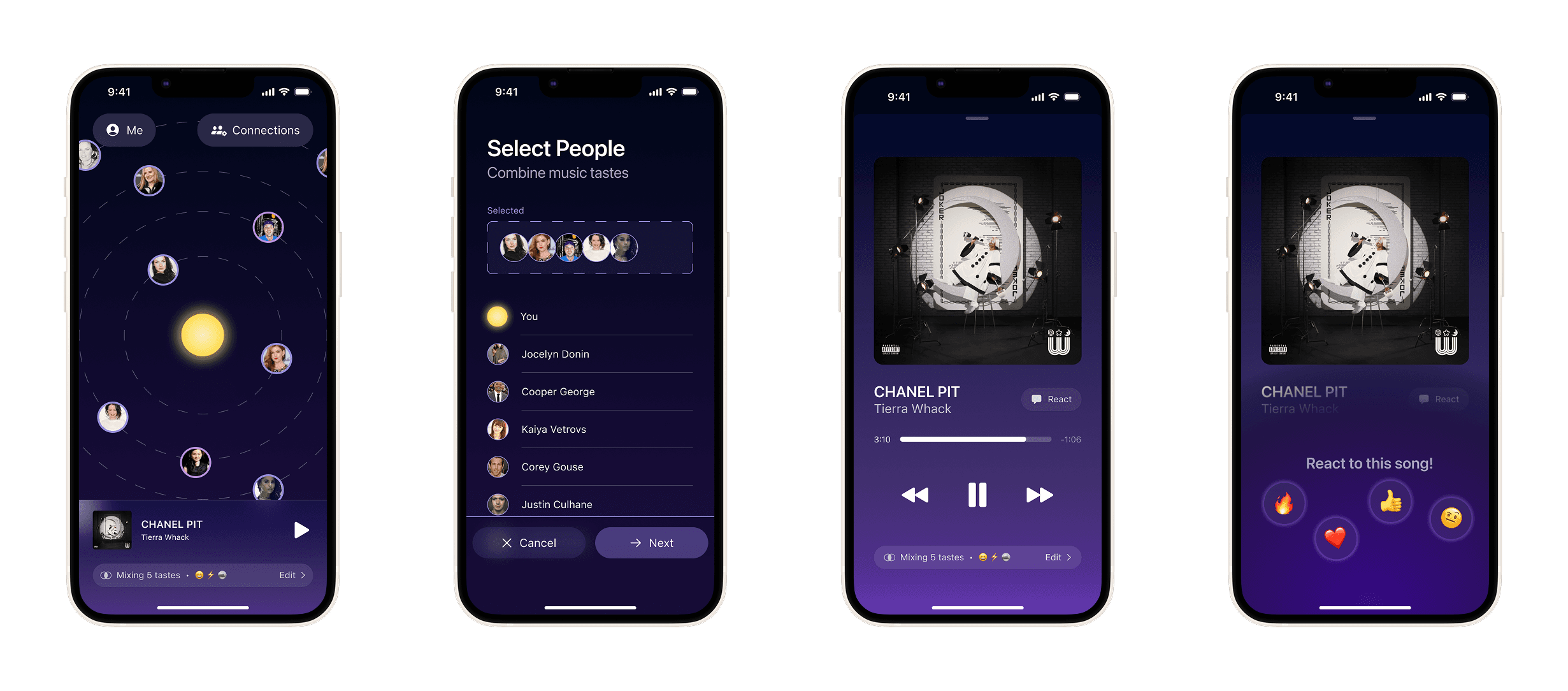
With this range of user feedback under wraps, we proceeded with the final design process. I was the primary UI designer, refining the prototypes I’d created, addressing areas of confusion our testing had identified. I explored how the speaker and app interfaces might overlap or contrast. I polished the interfaces’ design language, crafting a high-quality appearance that complemented the space-based motifs we had chosen. Throughout this process, I kept our storyboard and user testing in mind, ensuring that the app’s user flow aligned with the scenarios we had drafted.

Apollo was created in just 10 weeks, so there are many areas where the project could be expanded.
Deeper Connection
We designed Apollo believing that people can discover each other through music. I would love to do more research into the specific ways friends and family connect through music, illuminating ways in which Apollo might better foster this connection.
Accessibility Testing
Because Apollo aspires to connect family members across generations, accessibility and usability are especially important, with the product’s audience spanning a wide age range.
New Interactions
Apollo features a solar system-inspired interface, and I would love to experiment with this more, leaning into its unique layout to create an engaging experience that distinguishes Apollo from other music apps — all while maintaining usability and accessibility, of course.
As much as I loved the final product, the purpose of this project was to learn the details of the design process. More importantly, I did this project in a group. In my experience, group projects can become marked by unresolved debates or awkward silence as the team waits for ideas. This project was the opposite — my team collaborated enthusiastically and effectively. A key part of this was our research-based approach. Throughout the process, we consulted potential users, leading to informed, thoughtful choices shaped by research rather than opinion or assumption. Additionally, we used methods such as thematic analysis and IIOI to systemically approach the process, establishing tangible steps that allowed us to all contribute to meaningful progress. These approaches, combined with the team’s drive for success, resulted in exceptional teamwork, leaving me with lessons I’ll carry forward into my career.